Trauma & PTSD7 min read
Teen Trauma Symptoms Parents May Miss
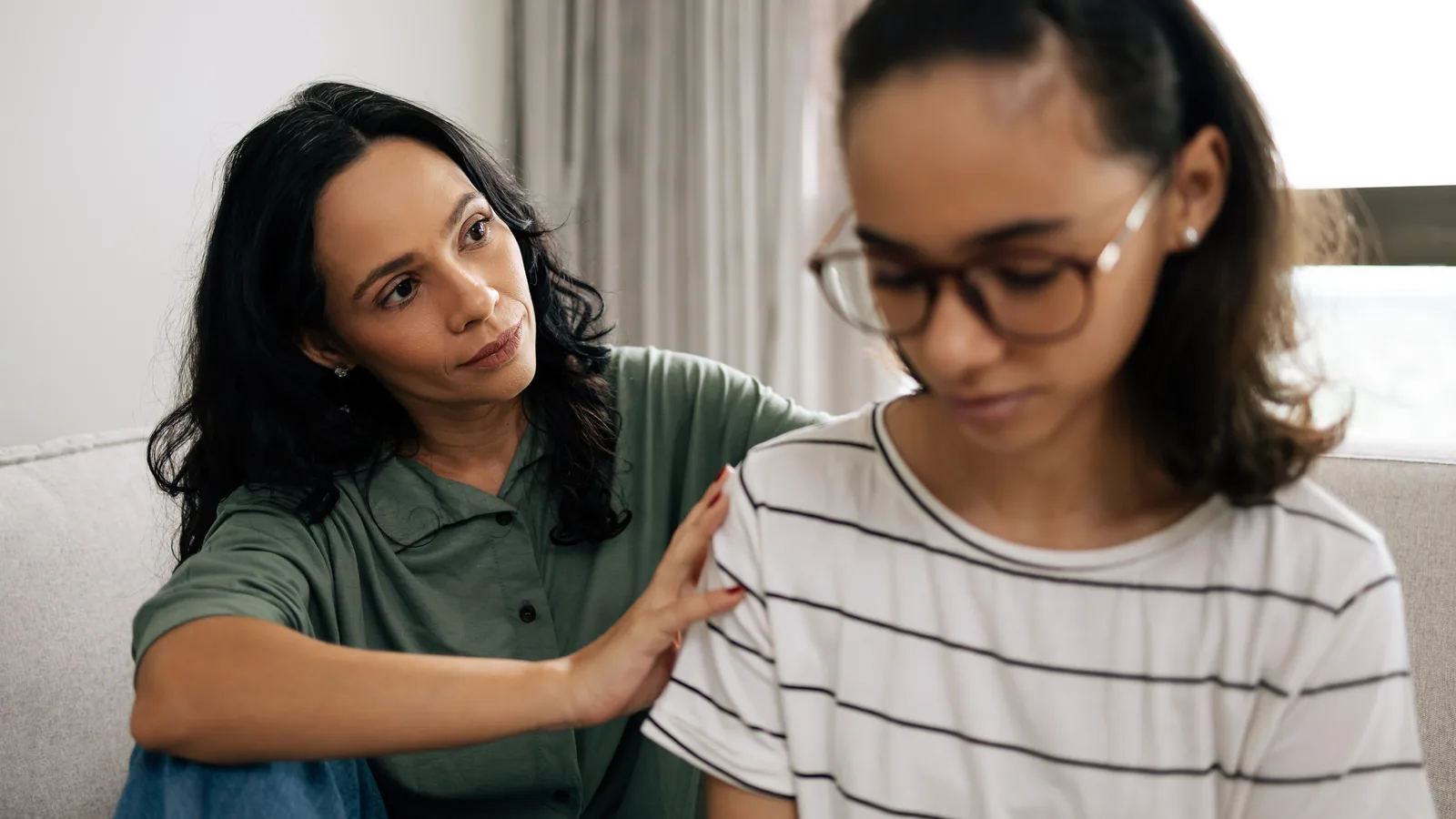
A parent guide to teen trauma symptoms that may look like anger, avoidance, shutdown, anxiety, school refusal, substance use, or family conflict.
By NorthLeaf Editorial Team
Read GuideTrauma & PTSD
Guides for families navigating teen trauma, PTSD symptoms, emotional safety, and trauma-informed care.
When something painful has happened to your teen — or when you suspect it has — it can be hard to know which changes are trauma-related and which are something else. Trauma in adolescents often hides in plain sight: avoidance of certain places or people, sudden reactivity, sleep problems, a need for control, or numbness that reads as indifference. Some of the most important symptoms are the ones parents are never told to look for.
The articles here explain what trauma-informed care actually means in practice — why pacing, emotional safety, and trust come before processing, and why healing is never about forcing a teen to retell what happened. Parents considering EMDR will find plain-language answers to the questions families most often ask about how it works and whether it fits.
Together, these guides are meant to help you respond steadily: understanding what your teen's nervous system may be doing, what support at home looks like, and when trauma symptoms deserve more structured clinical attention.
Articles
A parent guide to teen trauma symptoms that may look like anger, avoidance, shutdown, anxiety, school refusal, substance use, or family conflict.
By NorthLeaf Editorial Team
Read Guide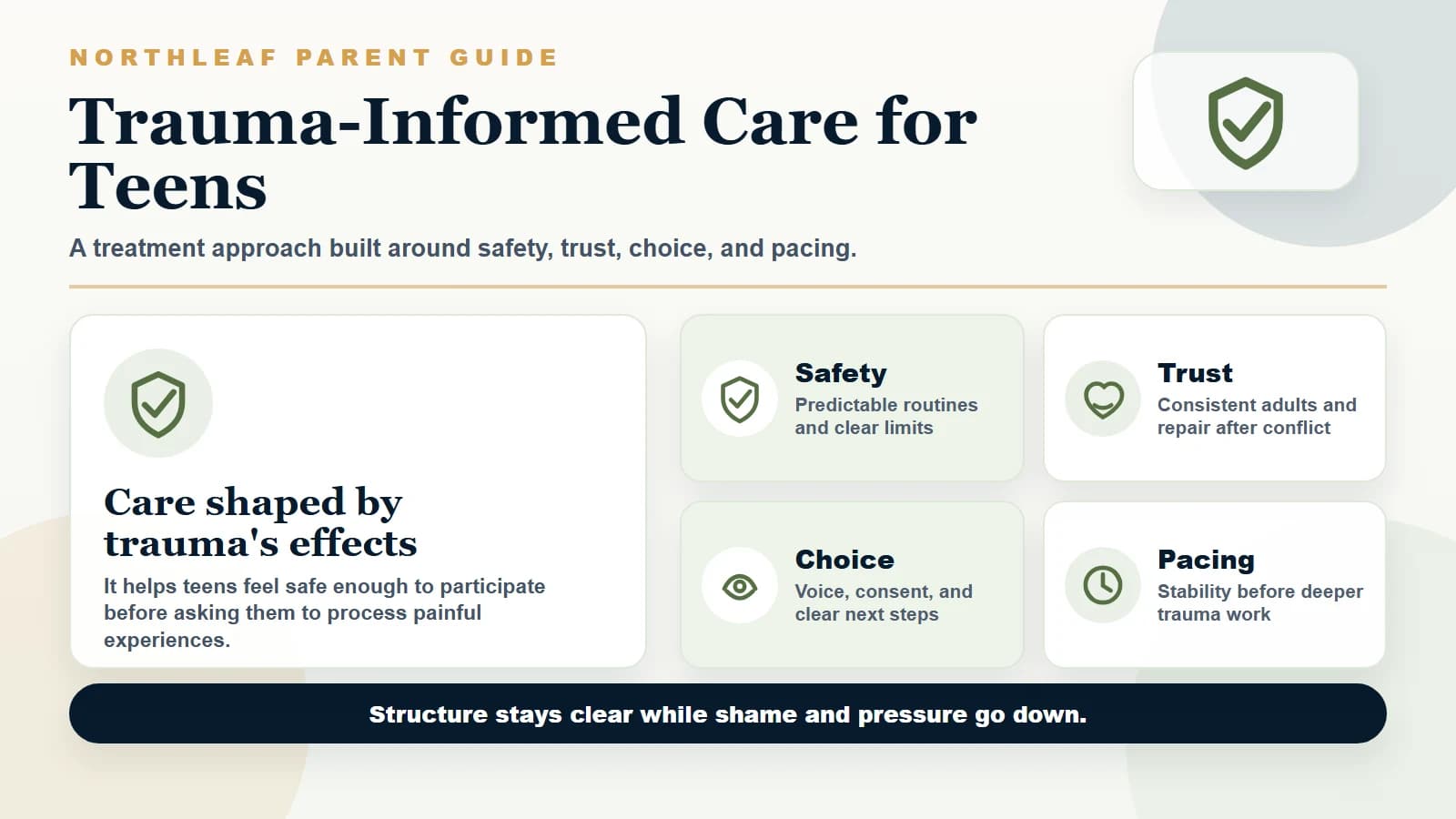
What trauma-informed care means for teens and why safety, trust, pacing, routines, and family involvement matter in treatment.
By NorthLeaf Editorial Team
Read Guide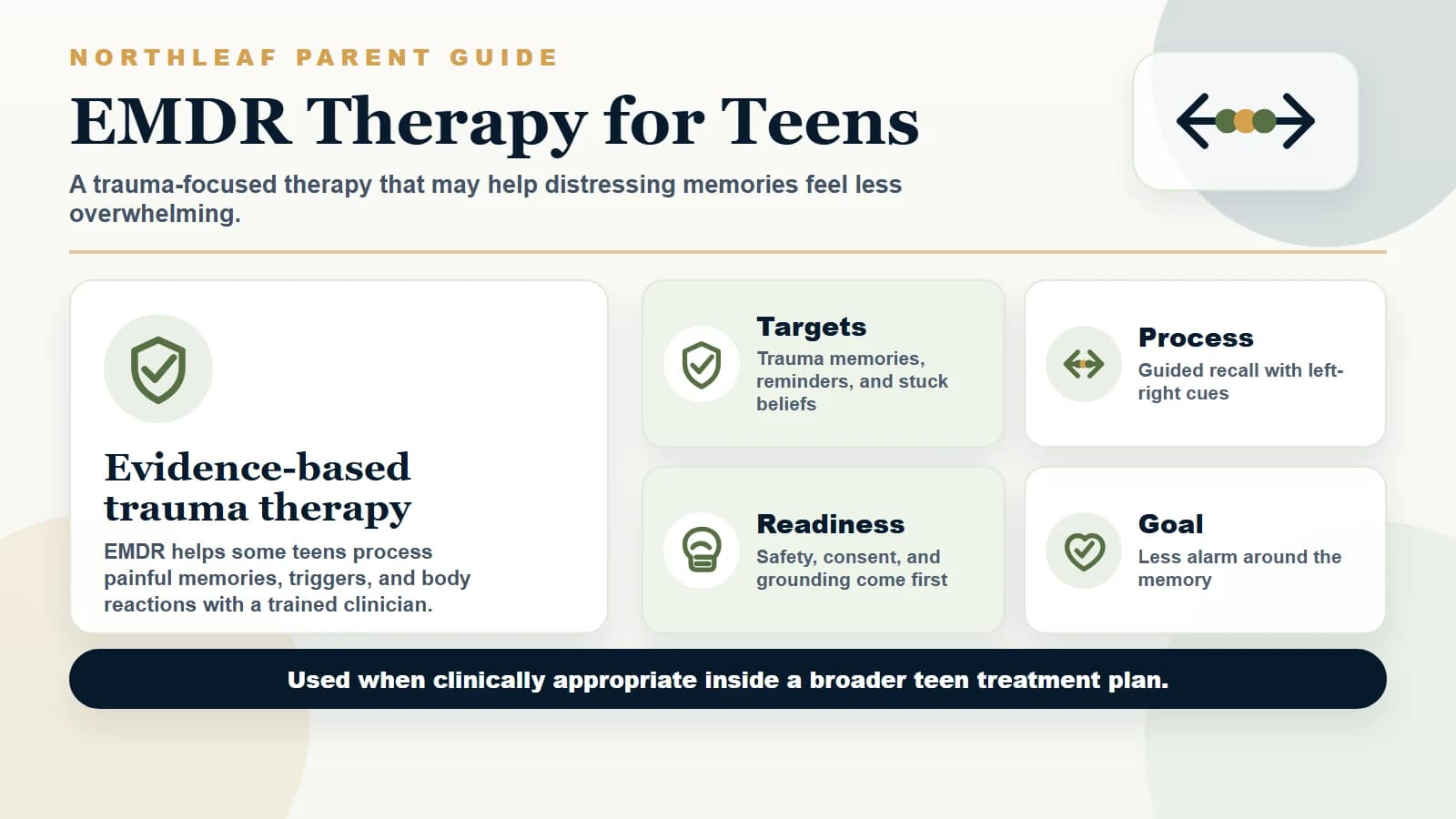
A parent guide to EMDR therapy for teens, including how it works, bilateral stimulation, readiness, safety, and residential treatment fit.
By NorthLeaf Editorial Team
Read GuideSpeak with admissions about what your teen is facing, what questions matter most right now, and whether a higher level of support may be appropriate.