
What EMDR can support
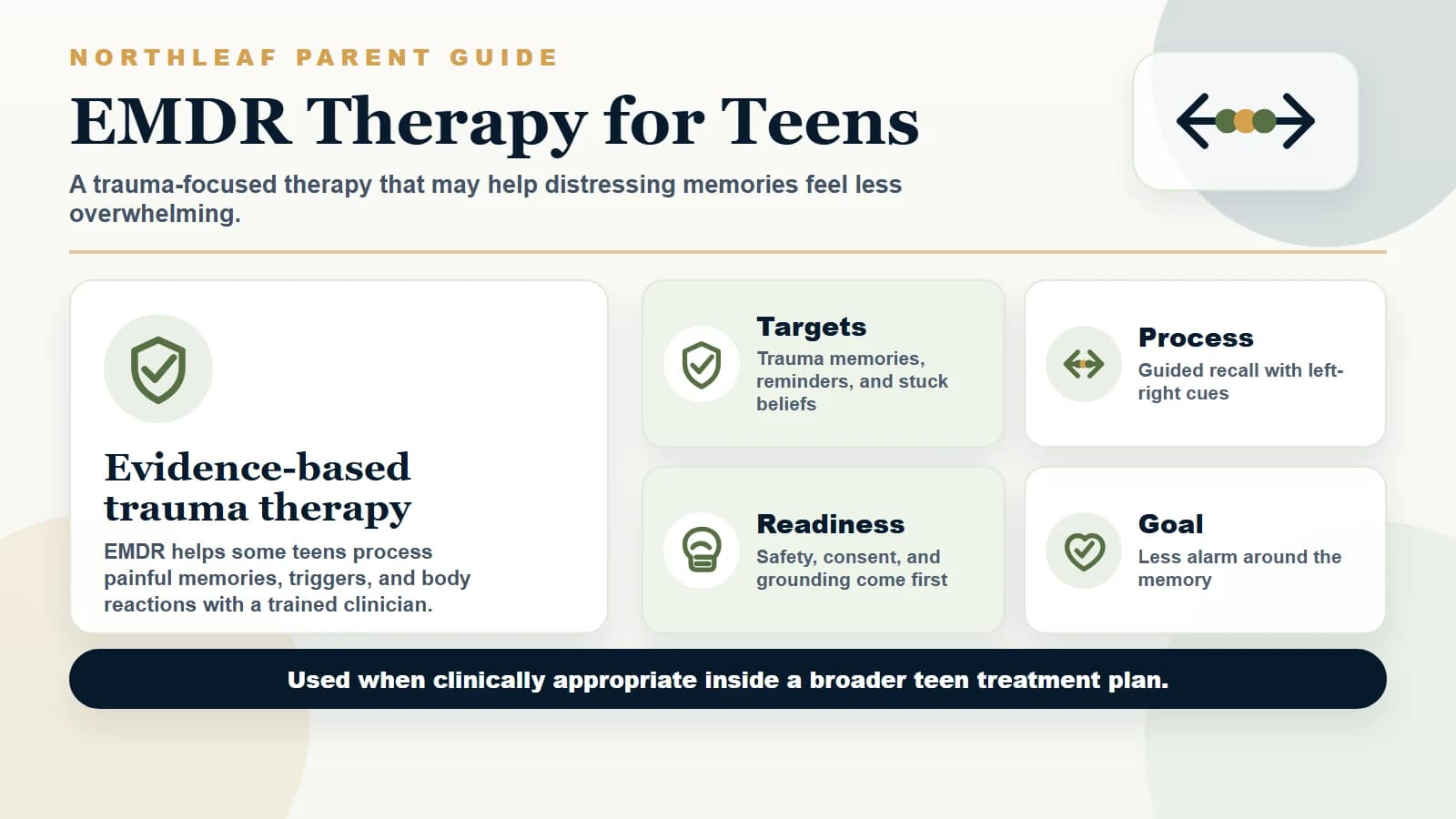
Eye Movement Desensitization and Reprocessing, often called EMDR, is a trauma-focused therapy that may help some adolescents process distressing memories and trauma-related symptoms. At NorthLeaf, EMDR should be understood as one available clinical tool inside a larger residential treatment plan, not as a quick fix or a guaranteed cure for trauma.
- EMDR may be considered when trauma symptoms are affecting mood, anxiety, avoidance, relationships, sleep, or daily functioning.
- Clinical readiness, consent, emotional stability, safety planning, and developmental fit all matter.
- EMDR works best when it is coordinated with stabilization, family work, skills practice, and aftercare planning.
Readiness matters before trauma processing
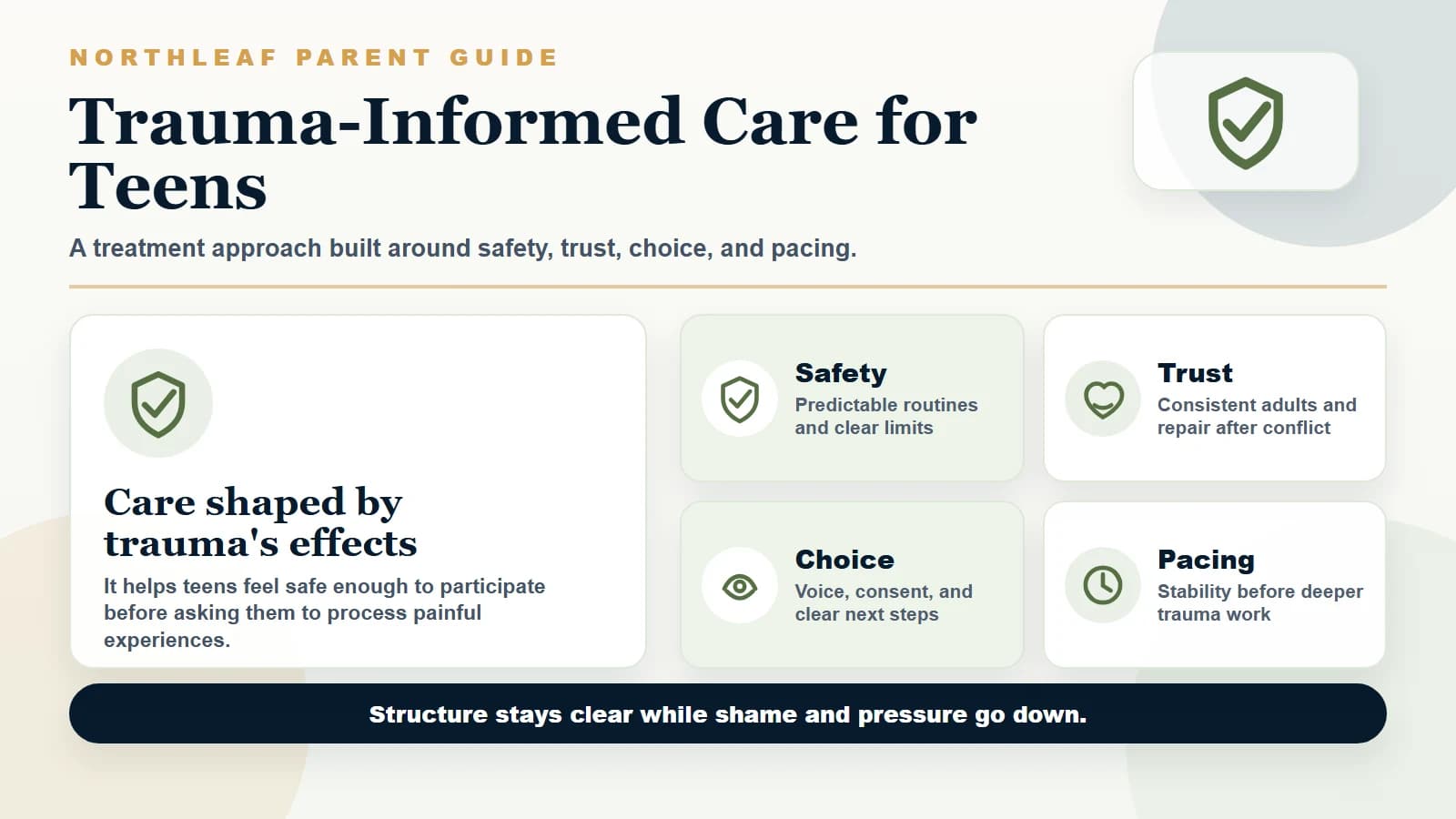
Parents often ask about EMDR when a teen is in visible pain and everyone wants relief quickly. But trauma work usually needs sequencing. A teen may first need stabilization, sleep support, grounding skills, emotion regulation, trust with the clinician, a safety plan, and enough ability to pause or slow down when distress rises.
- Is the teen currently safe enough for trauma processing work?
- Can the teen use grounding skills when distress increases?
- Are self-harm, suicidal thoughts, substance use, eating concerns, or dissociation active concerns?
- Does the teen understand what the therapy involves and agree to participate?
How EMDR fits inside residential care
In residential treatment, EMDR can be supported by the surrounding structure of care. A teen may work on grounding in individual therapy, practice regulation skills in groups, receive support during difficult moments, and involve family in a way that supports safety without forcing disclosure. The value is not only the EMDR session itself; it is the way trauma work is held inside a steadier treatment environment.
When EMDR may not be the first step
Even when EMDR is available and clinically appropriate, it may not be the first intervention for a particular teen. Active crisis, severe instability, medical concerns, difficulty maintaining safety, intense family conflict, substance withdrawal risk, or lack of consent may require a different sequence of care first. That does not mean trauma is being ignored. It means safety and readiness are being respected.
- Stabilization may come before deeper trauma processing.
- A teen should not be pushed to recount trauma before they have enough support and consent.
- Alternative trauma-informed supports can still be meaningful treatment.
What parents can ask
Parents do not need to know every clinical detail to ask useful questions. They can ask how readiness is assessed, how consent works, how the team helps a teen regulate after difficult sessions, and how EMDR connects to family therapy, school planning, psychiatric care, and discharge.