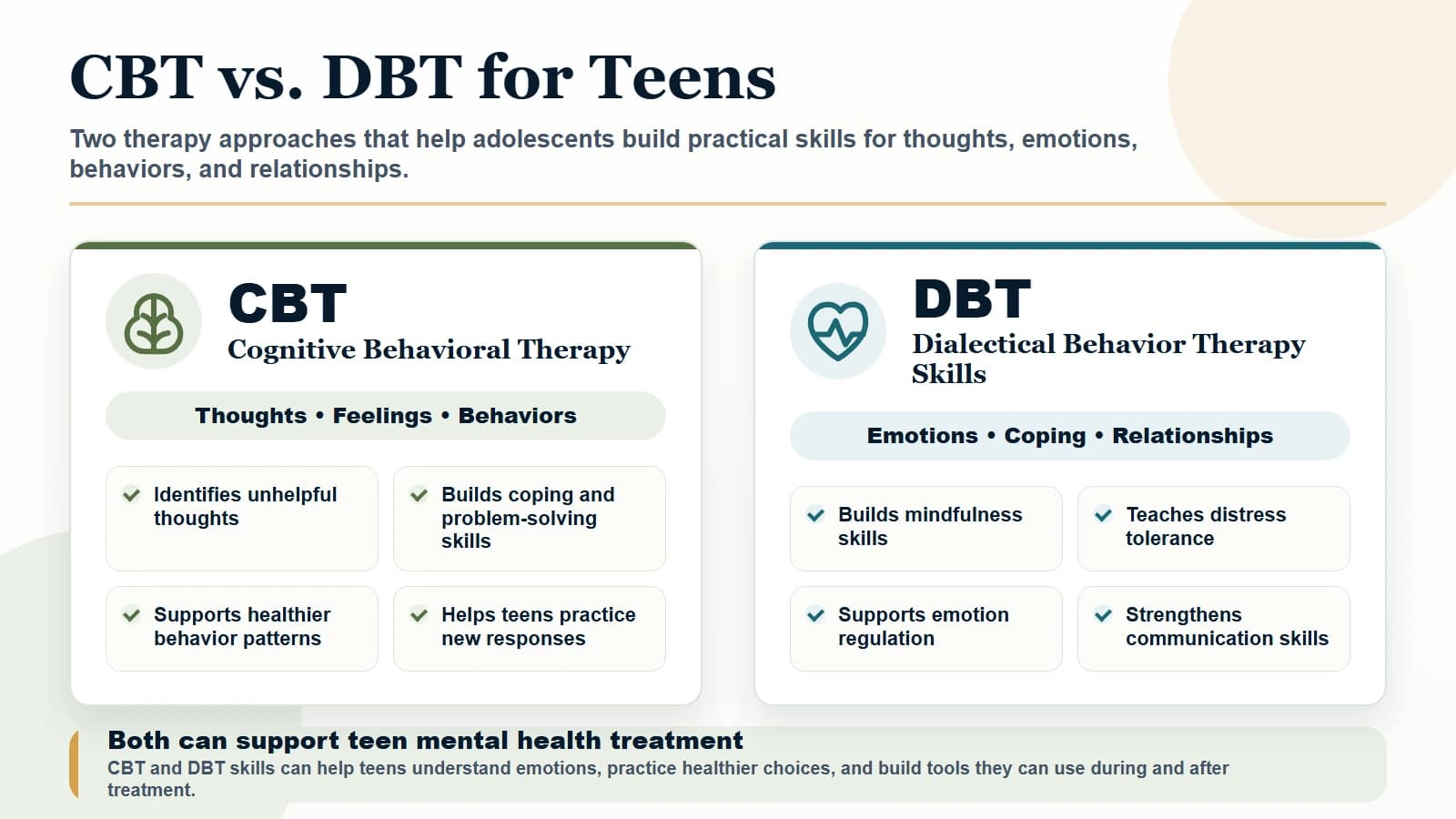

What DBT skills are meant to build
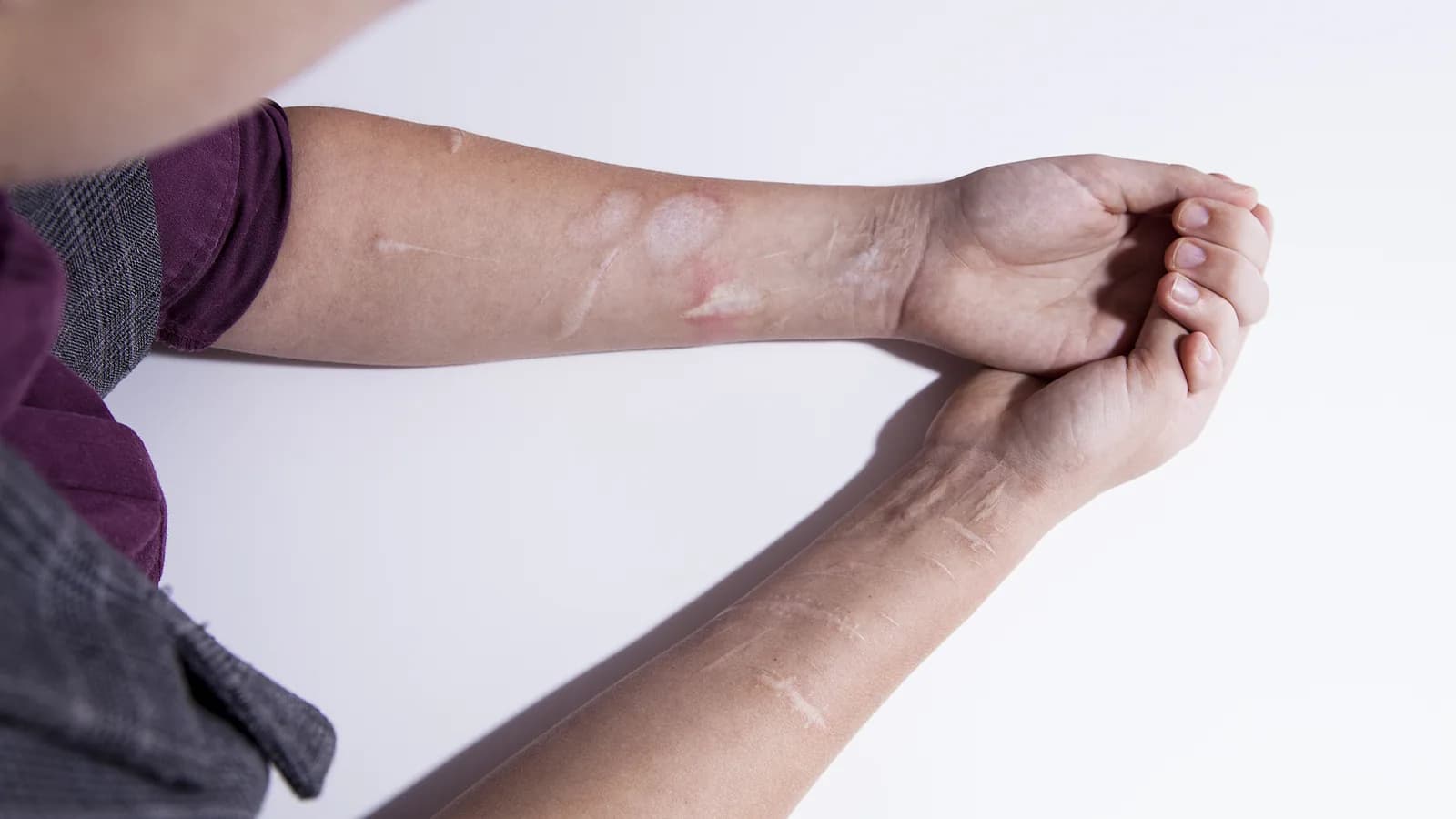
DBT is often discussed when a teen experiences intense emotions, impulsive choices, conflict, self-harm urges, or difficulty tolerating distress. DBT skills are practical tools: pause before acting, name what is happening, reduce emotional intensity, ask for help clearly, and choose a safer next step.
- Mindfulness: noticing what is happening without immediately reacting.
- Distress tolerance: getting through painful moments without making them worse.
- Emotion regulation: understanding and influencing emotional intensity.
- Interpersonal effectiveness: communicating needs while protecting relationships.
Why families ask about DBT
Families often ask about DBT when home life has become organized around crisis cycles: sudden escalation, fear, apologies, temporary calm, and then the same pattern repeating. In residential care, DBT-informed skills can give the teen and family a shared language for what to do before the next escalation becomes unsafe.
Safety-sensitive use
DBT skills are not a substitute for emergency support, a full risk assessment, or individualized safety planning. If a teen may harm themselves or someone else, families should use emergency and crisis resources immediately. The role of treatment is to reduce risk over time while keeping immediate safety central.
Validation and limits have to work together
Parents often feel trapped between validating a teen's pain and holding a limit. DBT-informed care can help families understand that both are necessary. A parent can say, 'I believe this feels unbearable,' while still securing medications, maintaining a school expectation, or requiring a safer coping step. Validation is not permission for unsafe behavior; limits are not proof that the emotion is fake.
Skills need repetition outside the group room
DBT skills become stronger through practice. A teen may learn distress tolerance in group, use it during a conflict with staff, process it in individual therapy, and then discuss how parents can support the same language at home. That repetition is one reason residential structure can be helpful for teens whose emotions move faster than their current coping capacity.
- Distress tolerance is practiced before the next crisis, not only during it.
- Emotion regulation connects sleep, meals, movement, vulnerability factors, and coping choices.
- Interpersonal skills can be practiced in family sessions, peer interactions, and school planning.