
What trauma-informed care means
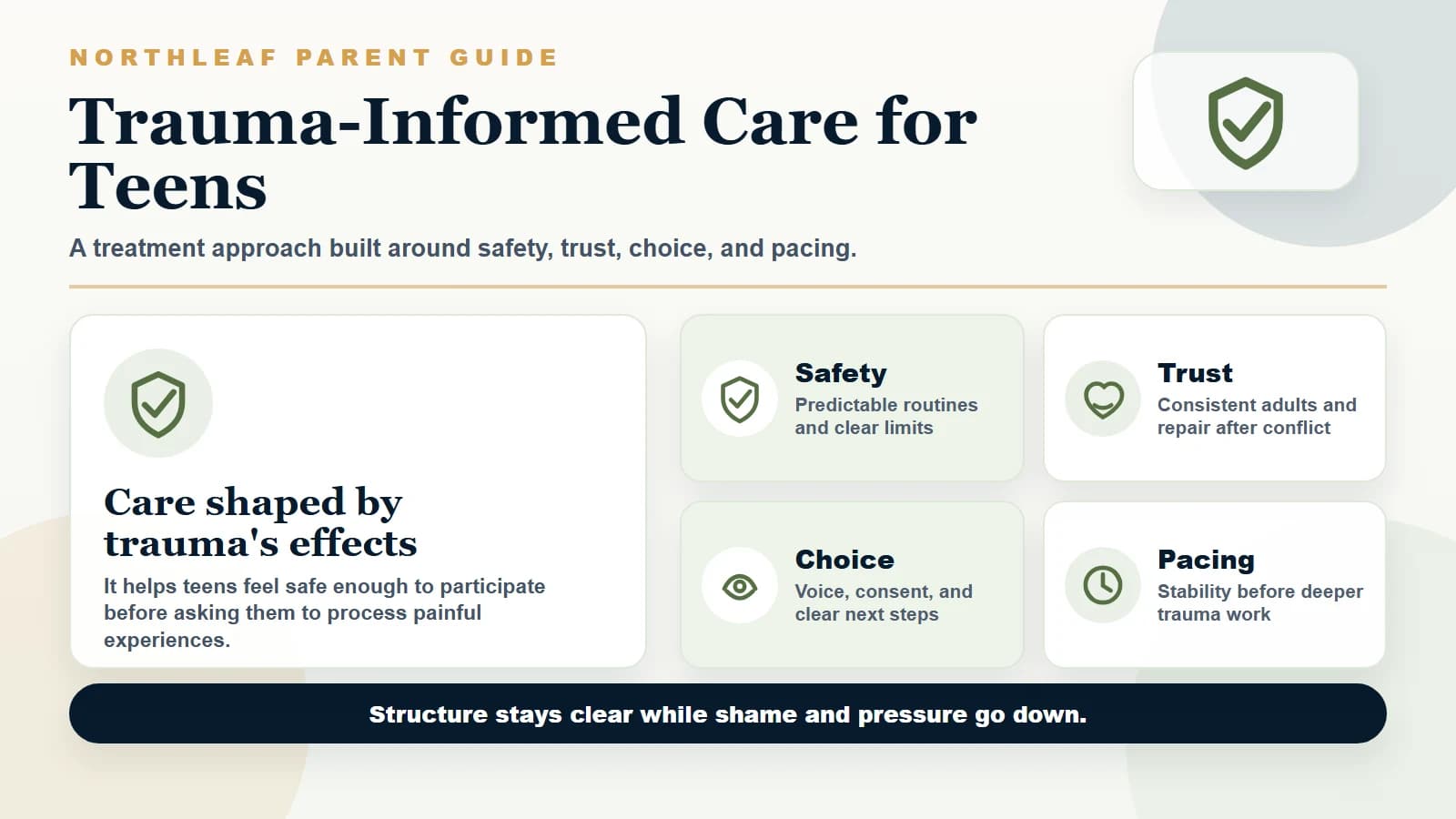
Trauma-informed care is not one single therapy. It is a way of organizing care around safety, predictability, trust, collaboration, and the recognition that painful experiences can shape behavior, emotion, attention, relationships, and the nervous system.
Why pacing matters
For some teens, moving too quickly into painful details can increase avoidance, shutdown, conflict, or emotional flooding. A trauma-informed approach usually begins with stabilization: helping the teen feel safer, understand triggers, build coping skills, and identify supportive adults before deeper trauma processing is considered.
How this can show up in residential care
In residential treatment, trauma-informed care should affect the whole environment, not only therapy sessions. Predictable routines, respectful limits, clear communication, and staff responses to escalation can all influence whether a teen experiences care as safe enough to participate.
- Staff explain expectations clearly and avoid unnecessary surprises.
- Treatment planning considers triggers, avoidance, dissociation, anger, shame, or distrust.
- Family work supports communication without forcing unsafe disclosures.
Trauma-informed does not mean limit-free
A trauma-informed environment still has rules, supervision, expectations, and accountability. The difference is how those limits are communicated and held. Teens who have experienced trauma may react strongly to sudden power struggles, humiliation, unpredictability, or feeling trapped. Clear, respectful limits can support safety without recreating the same helplessness treatment is trying to heal.
Stabilization can be real trauma care
Families sometimes worry that trauma is being ignored if a teen is not immediately processing painful memories. Stabilization is often part of trauma treatment. Sleep, safety, grounding, emotional regulation, trust, predictable routines, and family communication may need attention before deeper trauma-specific work is appropriate.
- A teen should not be pressured into detailed disclosure before they are ready.
- Safety planning and coping skills can reduce trauma-related disruption while readiness is assessed.
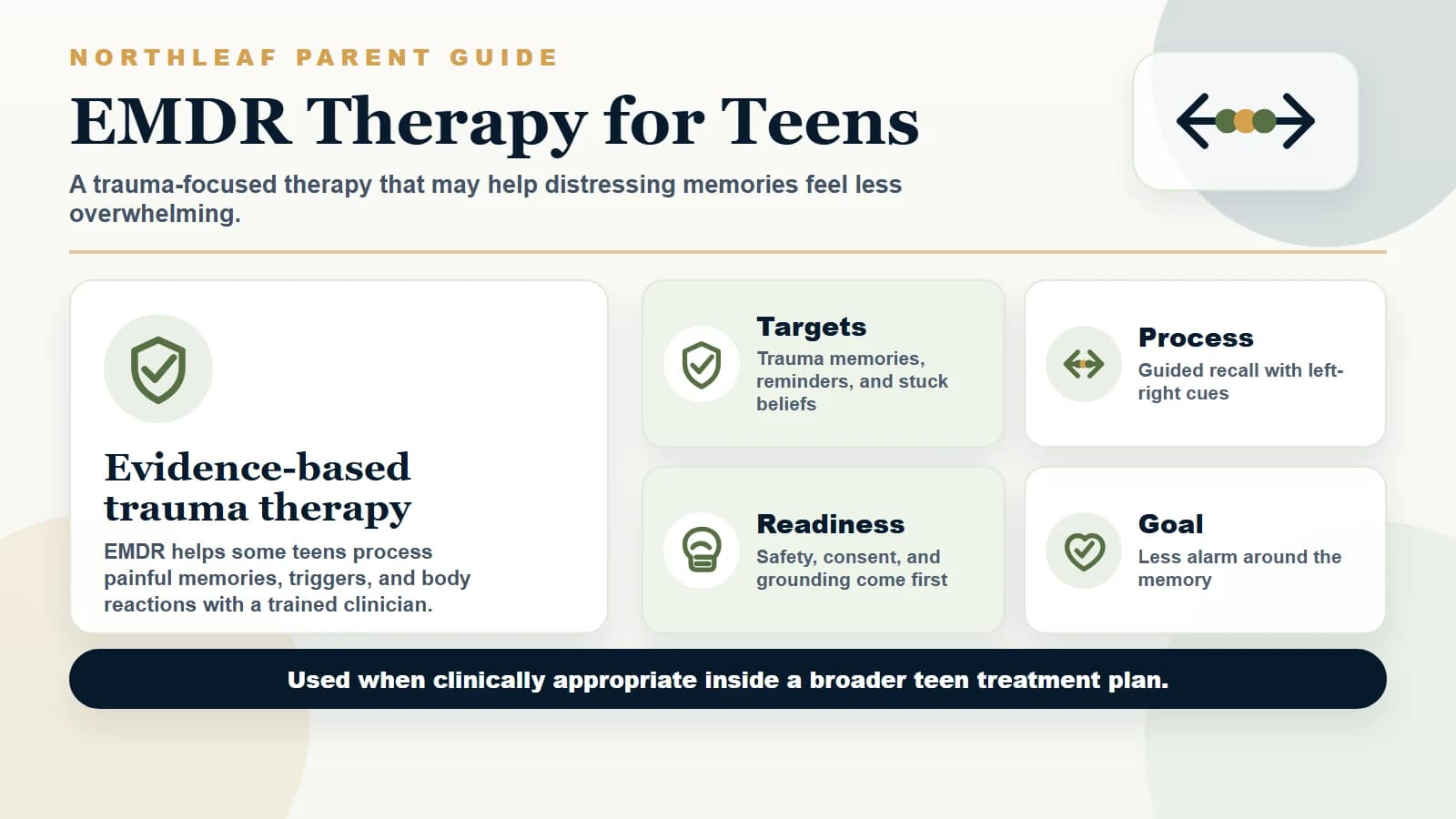
- Trauma-specific therapy should be sequenced around stability, consent, and clinical judgment.