
High school students with persistent sadness
40%
CDC 2023 YRBS data show persistent sadness or hopelessness remains widespread among high school students.
Safety-focused support
Safety-first guidance for parents concerned about self-harm, emotional distress, means safety, crisis support, and treatment planning.

Self-harm and safety assessment
Self-harm can occur with or without suicidal intent, but it should never be dismissed. National teen safety data show why families should ask direct questions, address immediate medical risk, and involve qualified support rather than relying on secrecy or promises alone.
40%
CDC 2023 YRBS data show persistent sadness or hopelessness remains widespread among high school students.
20%
CDC 2023 YRBS data show one in five high school students seriously considered attempting suicide.
20.1%
NIMH reports that about one in five U.S. adolescents ages 12-17 had a past-year major depressive episode in 2021.
40.6%
NIMH reports fewer than half of adolescents with a past-year major depressive episode received treatment.
Understanding the concern
A diagnosis or symptom pattern is only one part of the picture. Families also need to consider safety, functioning, school, relationships, routines, and what level of support is realistic at home.
Self-harm should always be taken seriously. It may occur with or without suicidal intent, but parents should not assume they know the level of risk without asking direct safety questions. If your teen may harm themselves, has a serious injury, has taken something, has access to lethal means, or cannot stay safe, call 911, go to the nearest emergency room, or call or text 988 in the United States.
A calm response can help a teen tell the truth. Parents can say, "I am not here to punish you. I need to understand how unsafe you feel, and I want to get help with you." Shame, threats, and interrogation often make self-harm more secretive.
Families often feel shock, fear, anger, guilt, and confusion when they discover self-harm. It can be tempting to search for one explanation: attention, rebellion, manipulation, depression, peer influence, trauma, or suicidality. The truth may be more complicated. For some teens, self-harm becomes a fast but dangerous way to interrupt emotional pain, feel something after numbness, punish themselves, communicate distress they cannot say out loud, or regain control when feelings are overwhelming.
Understanding the function does not make self-harm safe. It helps treatment target what the behavior is doing for the teen. If self-harm is reducing emotional pressure for ten minutes, the teen needs other ways to survive those ten minutes. If it is tied to shame, trauma, depression, panic, substance use, or conflict, the larger pattern needs treatment too.
Many parents worry that asking about suicide will put the idea in a teen's head. Safety experts generally encourage direct, calm questions when risk is possible. Parents can ask whether the teen wants to die, whether they have a plan, whether they have access to lethal means, whether they can stay safe tonight, and whether they have hurt themselves or feel urges to do so again.
The goal is not to conduct a perfect clinical assessment at home. The goal is to find out whether emergency help is needed and to involve qualified support. If the teen has a serious injury, has used substances, may have taken medication or poison, has a suicide plan, cannot agree to immediate safety, or parents cannot provide enough supervision, emergency evaluation should come first.
A teen who expects punishment may hide injuries, lie about urges, or move self-harm into more secretive moments. A teen who experiences calm concern is more likely to share what happened. Calm does not mean casual. Parents can communicate seriousness without panic: "I love you. I am glad I know. We are going to get help. I need to ask some direct safety questions."
Parents should avoid asking for promises that replace safety planning. A promise not to self-harm may bring short-term relief, but it is not a plan. A plan names warning signs, coping steps, people to contact, supervision needs, means-safety steps, crisis resources, professional follow-up, and what happens if the teen cannot stay safe.
Self-harm may occur with depression, anxiety, trauma, suicidal thoughts, substance use, eating concerns, bullying, family conflict, identity stress, peer contagion, or intense shame. Treating it only as a behavior problem can miss what is feeding it. Treating it only as emotional pain can miss concrete safety needs.
A strong assessment should ask what happened before the urge, what the teen felt afterward, whether the teen wanted to die, whether there was escalation, whether injuries are becoming more severe, whether substances were involved, and whether the family can realistically monitor safety at home.
Residential treatment may be worth discussing when self-harm risk is not an immediate emergency but remains too difficult to manage safely with outpatient support alone. This may include repeated urges, escalating emotional crises, school disruption, family monitoring exhaustion, co-occurring depression or trauma, or inability to use coping skills outside appointments.
If risk is active or immediate, emergency care comes first. Residential treatment is not a crisis substitute for a teen who needs hospital evaluation, medical care, or immediate protection. A responsible admissions process should make that distinction clearly.
Signs and symptoms
The signs below should not be used for diagnosis. They are starting points for a conversation with a qualified professional or admissions specialist.
Parent planning
A clear pattern is more useful than a perfect label. Before an admissions or clinical conversation, parents can write down what they are seeing, how often it happens, and how it affects daily life.
Daily life impact
Self-harm can change the entire household. Parents may feel afraid to leave a teen alone, siblings may notice tension, and ordinary conflict can become loaded with safety concerns. The family needs a plan that includes professional guidance, supervision expectations, means safety, and what to do if risk increases.
Daily life may start revolving around checking, privacy, bathrooms, bedrooms, clothing, school stress, and whether ordinary arguments could become unsafe. Parents may feel like every limit is risky and every quiet moment needs investigation. That level of vigilance is exhausting and often unsustainable without support.
A plan should help the family move from constant fear to structured safety: what to secure, what to monitor, what language to use, when to call for help, how to reduce shame, and how to rebuild trust without pretending risk has disappeared.
Residential treatment fit
Residential treatment may be worth discussing after immediate safety is addressed if self-harm risk, emotional escalation, family monitoring needs, or daily functioning cannot be managed safely with outpatient support alone. Emergency care comes first when risk is active or immediate.
It may also be worth discussing when a teen can stay safe in the moment but repeatedly returns to self-harm urges, cannot use skills at home, has co-occurring depression or trauma, misses school, isolates, or needs a more structured environment for observation and practice.
The right level of care depends on severity, intent, injury risk, suicidal thoughts, access to lethal means, substance use, family supervision capacity, and medical needs. These are clinical questions, not website decisions.
Treatment approach
Treatment may focus on safety planning, emotion regulation, distress tolerance, reducing access to means, family communication, and underlying depression, anxiety, trauma, or co-occurring concerns. DBT skills are often discussed because they teach practical tools for surviving intense moments without making them worse.
A useful plan should be practiced when the teen is calm, not invented during a crisis. Teens may need concrete alternatives for the moments when distress spikes: who to tell, where to go, what to do with urges, how to reduce access, what skills to try first, and what step means adults take over.
Treatment should also reduce secrecy. The goal is not to make parents monitor every second forever. The goal is to create enough safety, communication, coping skills, and professional support that the teen has more options than hiding pain.
NorthLeaf support
Treatment planning should connect symptoms with daily functioning, safety, family needs, school needs, and the next level of support after residential care.
Deeper parent guide
These sections are written for parents who need more than a symptom checklist. They focus on the patterns that can keep a teen stuck, what families often miss, and what good treatment planning should clarify before any level-of-care decision.
Self-harm is frightening for parents because it makes private pain visible. It can be connected to emotion regulation, numbness, shame, self-punishment, trauma, peer influence, suicidal thoughts, or a teen's attempt to survive feelings they do not know how to express.
The page must be direct without being graphic. Parents need clear guidance that self-harm should be taken seriously, assessed professionally, and discussed without disgust, threats, or panic-driven interrogation.
Self-harm and suicidal ideation can overlap, but they are not identical. Every disclosure still deserves direct safety questions, risk assessment, and a plan for immediate help if danger is present.
A safer first response is: 'I am really glad I know. I am not angry that you are hurting. I need to ask direct safety questions because I love you and we are going to get help with this.'
NorthLeaf treats adolescents struggling with self-harm when they can be safely supported in a PRTF/residential setting. Residential care is especially relevant when self-harm is recurring, escalating, connected to suicidal thoughts, hidden from caregivers, paired with severe depression or trauma, or not improving with outpatient support. If immediate danger is present, emergency evaluation comes first.
Parents need guidance on how to ask direct safety questions, respond without shame, secure dangerous items, and create a plan that does not rely only on constant surveillance.
Family work can help caregivers respond calmly, coordinate supervision, reduce access to dangerous items, avoid threats that increase secrecy, and repair after painful discoveries. Parents may also need support for their own fear and guilt so those feelings do not drive every response.
School may need to be part of the safety plan when self-harm risk affects attendance, peer stress, bathroom access, counselor support, or the transition back after a crisis.
A school plan may include identifying a trusted counselor, clarifying bathroom or nurse-office support, reducing triggering workload pressure during stabilization, planning re-entry after absence, and addressing peer dynamics without exposing private clinical details unnecessarily.
Related conditions
Support for teens whose anxiety is making life smaller at school, at home, with friends, or in daily routines.
Support for adolescents experiencing persistent sadness, withdrawal, low motivation, or emotional heaviness.
Support for teens navigating painful experiences, emotional reactivity, avoidance, or distress.
Related resources

A safety-first parent guide to suicide safety planning for teens, including direct questions, warning signs, emergency steps, and treatment follow-up.
By NorthLeaf Editorial Team
Read Guide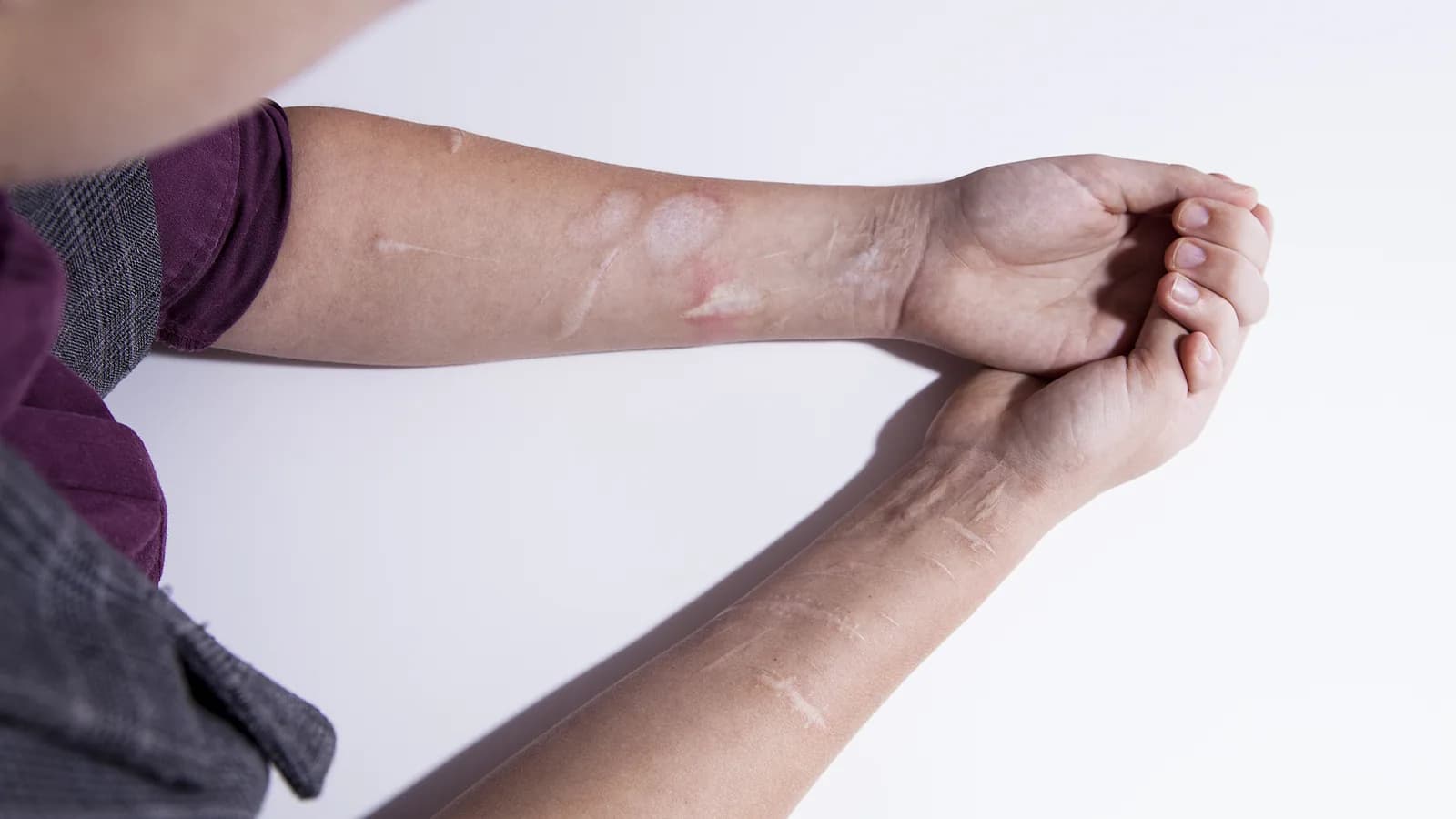
Safety-first guidance for parents who discover or suspect teen self-harm, including what to say, what to avoid, and when to seek emergency help.
By NorthLeaf Editorial Team
Read Guide
What parents can say and do when a teen talks about suicide, including direct safety questions, emergency steps, and treatment follow-up.
By NorthLeaf Editorial Team
Read Guide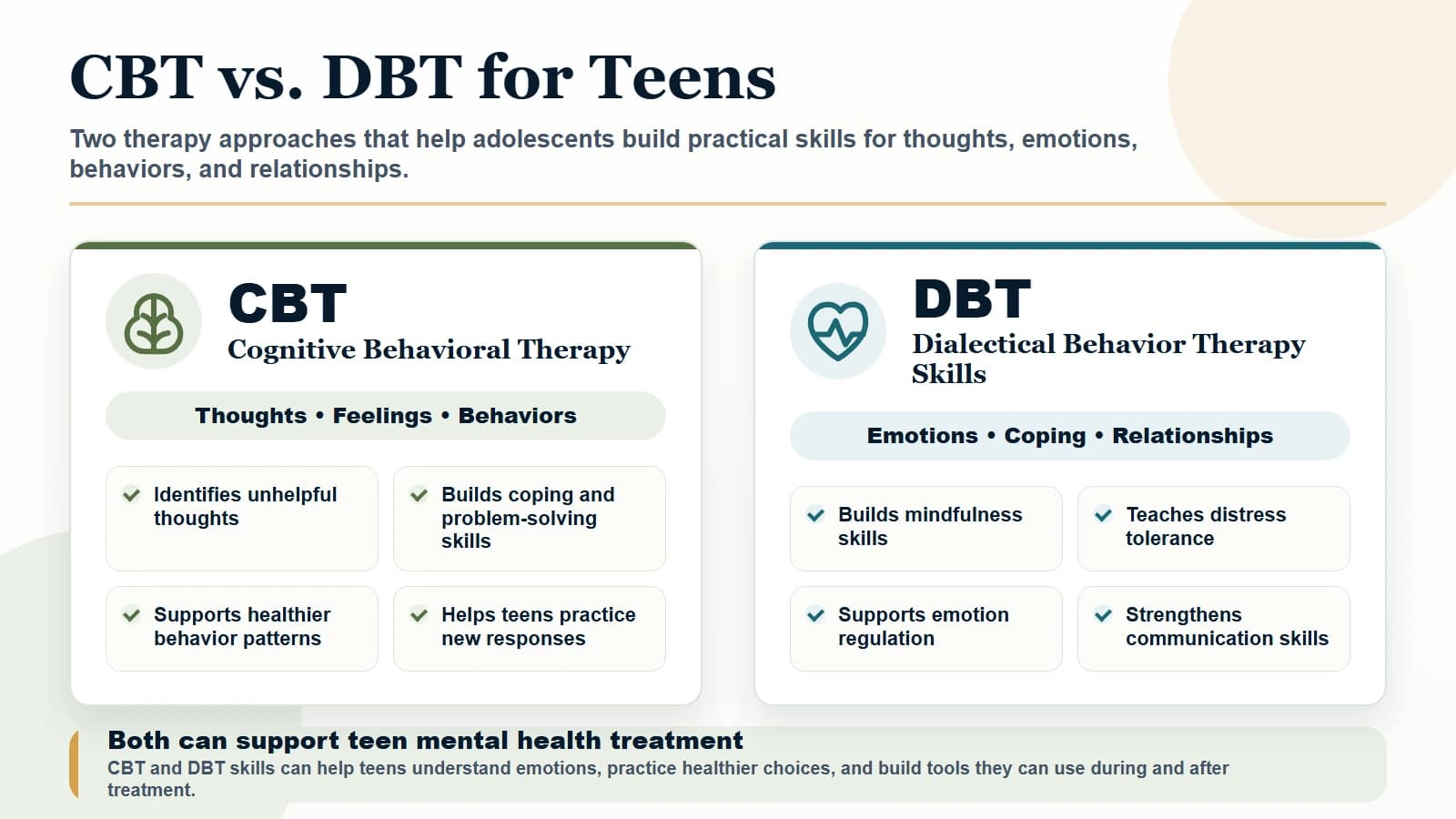
A parent-friendly comparison of CBT and DBT skills for teens, including anxiety, depression, self-harm, emotional regulation, and family support.
By NorthLeaf Editorial Team
Read GuideRelated services
Common questions
Speak with admissions about what your teen is experiencing, whether residential support may be appropriate to explore, and how to begin insurance verification.