
What Trauma-Informed Care Means for Teens
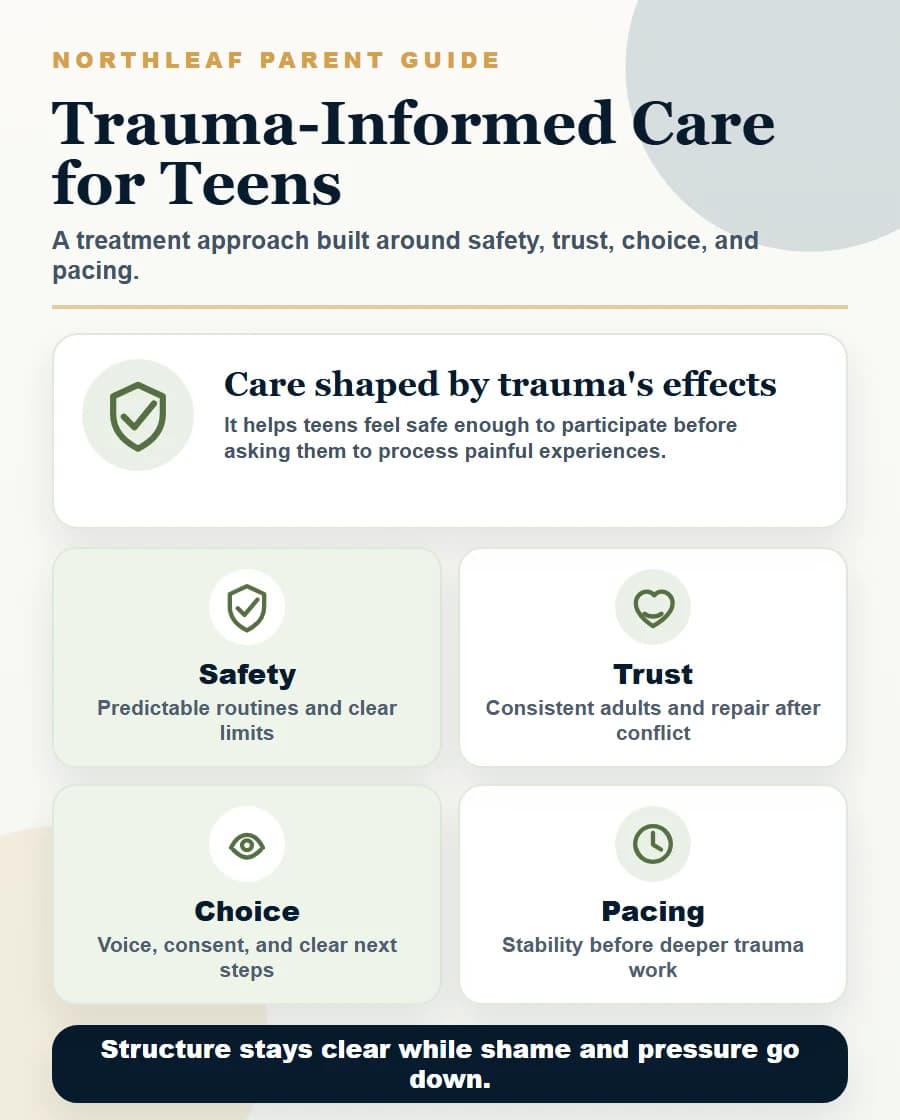
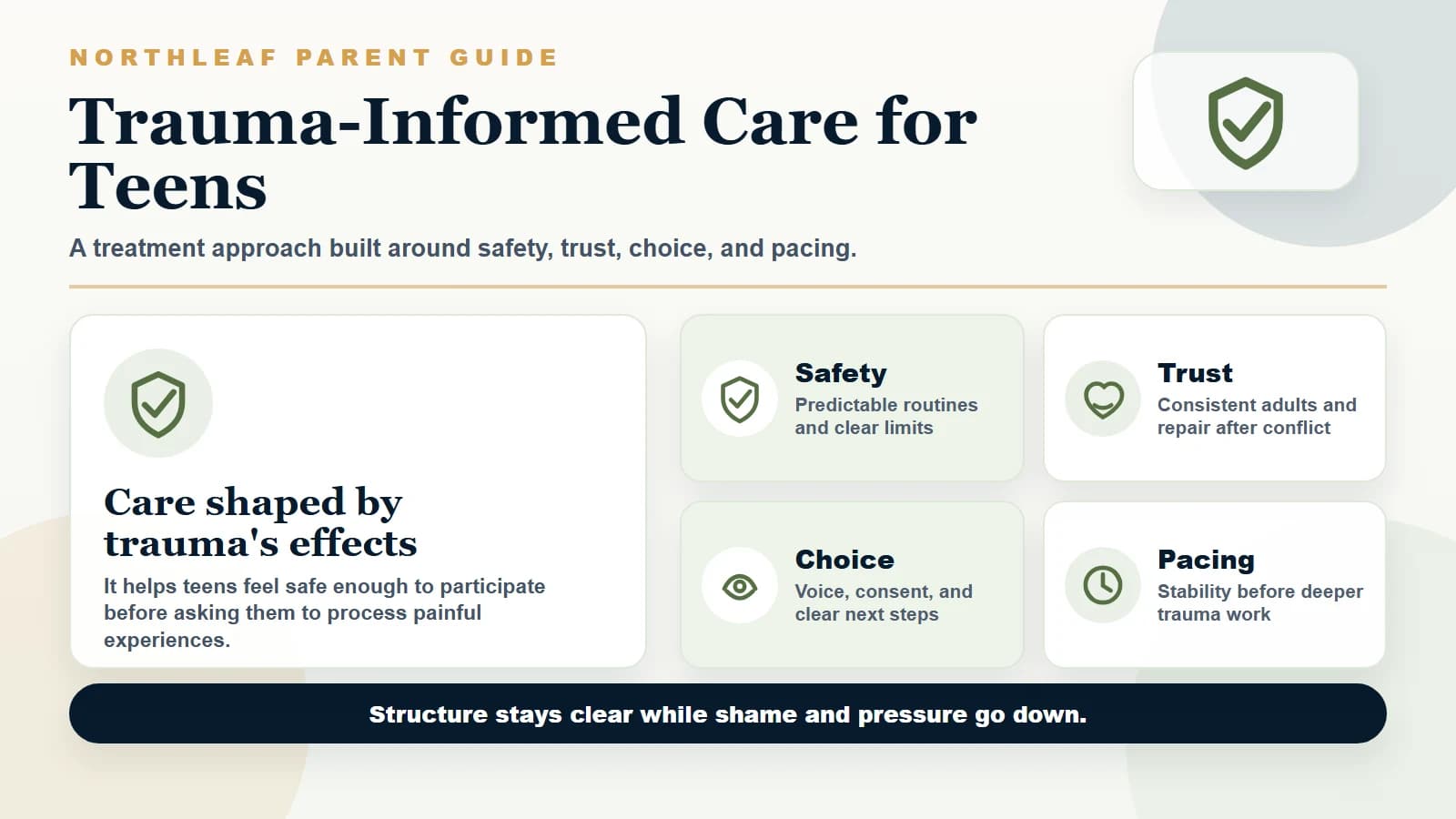
Trauma-informed care is one of the most common phrases in adolescent mental health treatment, but parents may not know what it should mean in practice. At its best, trauma-informed care is not a slogan. It is a way of organizing treatment around safety, trust, choice, collaboration, emotional regulation, and careful pacing.
A trauma-informed approach recognizes that painful experiences can affect behavior, attention, emotions, relationships, sleep, school, and the body's stress response. A teen who seems angry, avoidant, controlling, shut down, or mistrustful may be responding from fear or protection, even when the behavior still needs limits.
Trauma-informed does not mean no boundaries
Some parents worry that trauma-informed care means letting unsafe or disrespectful behavior continue. It should not. Trauma-informed care sets limits in ways that are predictable, respectful, and connected to safety. The goal is to avoid recreating shame, chaos, or powerlessness while still maintaining structure.
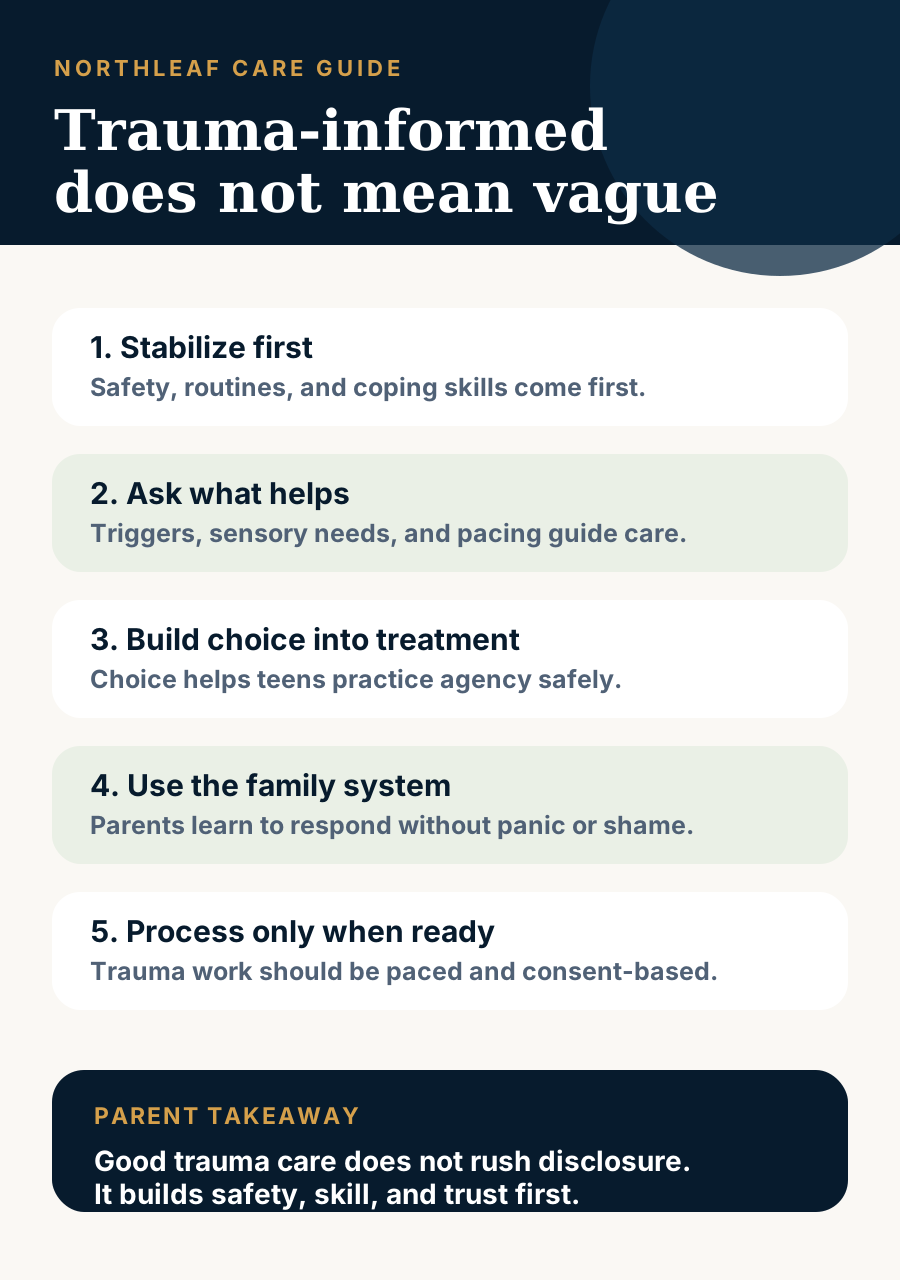
What trauma-informed care should include
- Predictable routines and clear expectations.
- Attention to triggers, shutdown, dissociation, anger, avoidance, and shame.
- Staff responses that reduce escalation rather than intensify it.
- Skill-building before deeper trauma processing.
- Family involvement that respects safety and pacing.
Why pacing matters
Not every teen is ready to tell a trauma story in detail. Moving too fast can increase symptoms or avoidance. Trauma-informed care often begins with stabilization: helping the teen feel safer, sleep more predictably, understand body signals, identify triggers, and practice coping skills before deeper processing is considered.
What trauma-informed care may look like day to day
In a residential setting, trauma-informed care may show up in ordinary moments: how staff wake a teen, how limits are explained, how privacy is respected, how a shutdown is handled, how choices are offered, and how the team responds when a teen is triggered. The approach should be visible in the environment, not only in individual therapy.
Parents can ask for examples. How does the team respond if a teen refuses group? What happens when a teen becomes verbally aggressive? How are room checks, phone calls, family sessions, and consequences handled in ways that preserve safety and dignity? Concrete answers are more useful than broad promises.
Red flags in trauma language
Be cautious when trauma-informed language is used to excuse chaos, avoid accountability, or promise rapid trauma resolution. Also be cautious when programs push teens to disclose details before trust and stabilization exist. Trauma-informed care should balance compassion, structure, choice, skill-building, and safety.
How parents can support trauma-informed work
Parents can support trauma-informed treatment by becoming more predictable at home. That may mean giving clearer transitions, reducing surprise confrontations, asking fewer stacked questions, using calm follow-through, and repairing when a conversation becomes too intense. Predictability does not mean permissiveness. It means the teen can understand what adults will do next.
Parents can also ask which coping skills the teen is practicing and how those skills should be used during family calls, visits, or discharge planning. Trauma-informed support works best when the teen hears a consistent message from the program and home.
Ask about training and supervision
Because trauma-informed care is a broad phrase, families can ask how staff are trained, how staff responses are supervised, and how the program handles incidents that may feel triggering for teens. The answer should be practical. Parents are looking for evidence that the approach shapes daily care, not only marketing language.
Parents can also ask how the program distinguishes trauma-informed care from trauma-specific therapy. A teen may benefit from a trauma-informed environment even when deeper trauma processing is not appropriate yet. Clarity helps families understand what support is available now and what may need to continue after discharge.
The strongest answers will connect trauma-informed principles to specific routines, staff expectations, family communication, and discharge planning.
Questions parents can ask
- How do you assess trauma history without pushing too quickly?
- How do staff respond when a teen shuts down, refuses, or escalates?
- What trauma-specific therapies are available, and who provides them?
- How are parents involved without forcing unsafe disclosure?