
CBT vs. DBT for Teens: What Parents Should Know
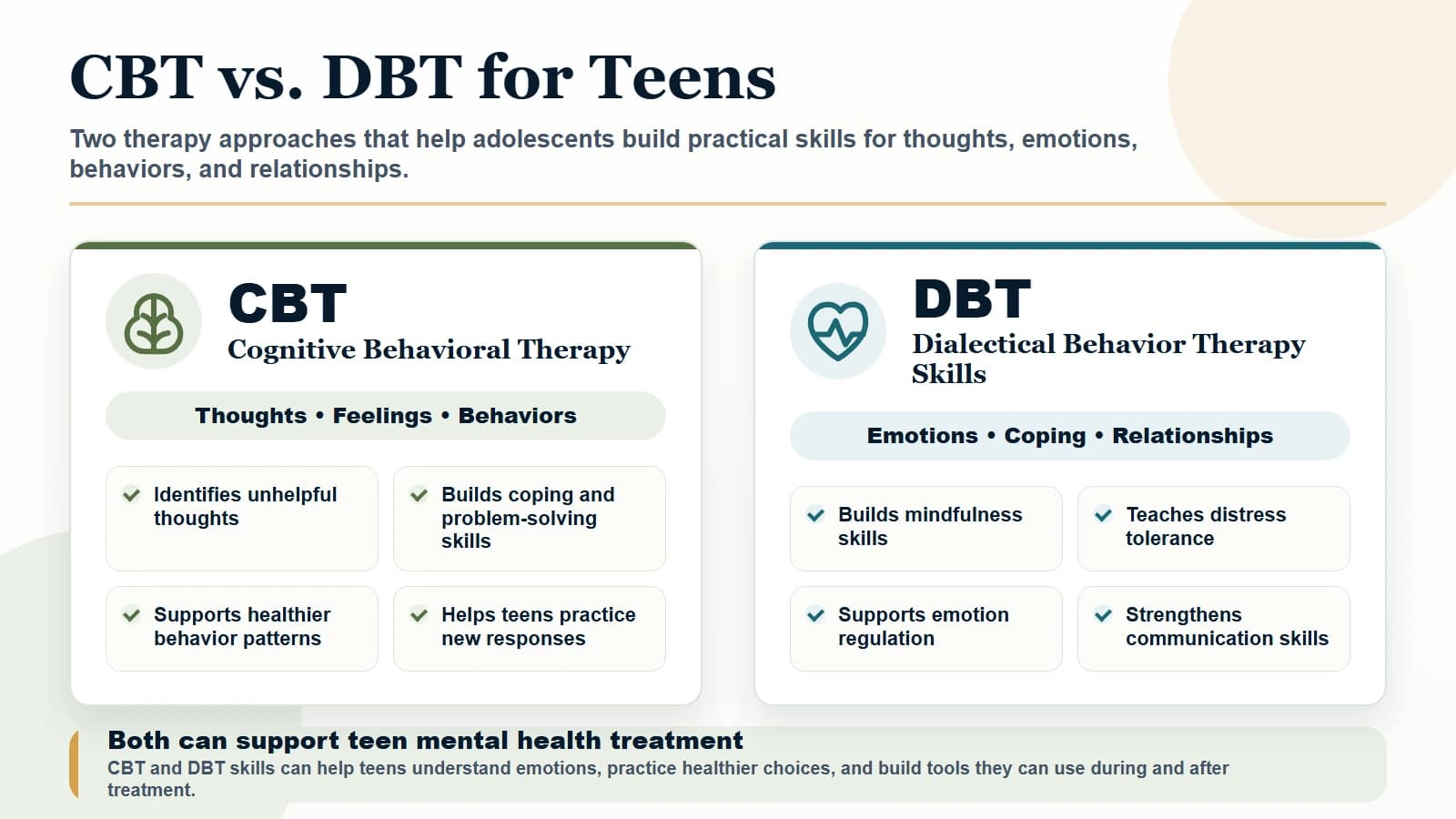
Parents researching teen treatment often see CBT and DBT everywhere. The terms can start to blur, especially when programs describe themselves as evidence-based, skills-based, DBT-informed, CBT-informed, or trauma-informed. CBT and DBT can both be helpful, but they are not the same thing.
What CBT focuses on
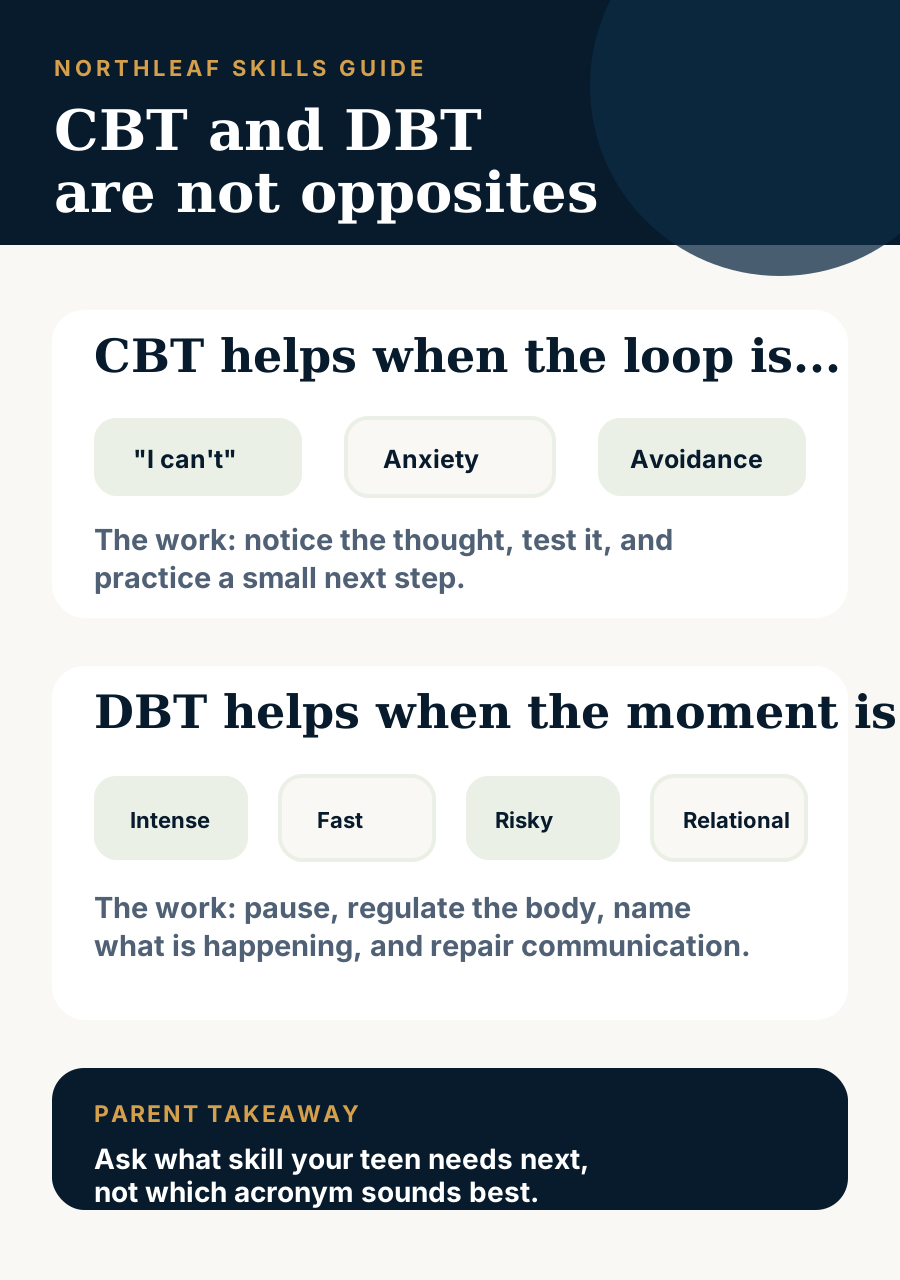
Cognitive behavioral therapy helps teens understand how thoughts, emotions, body sensations, behavior, and situations influence one another. A teen with anxiety may learn how avoidance brings short-term relief but long-term fear. A teen with depression may learn how withdrawal reduces energy and connection. CBT often helps teens practice more flexible thinking and different behavioral steps.
What DBT skills focus on
DBT skills are often used when emotions feel intense, impulsive behavior is present, relationships are volatile, or self-harm urges occur. DBT skills commonly focus on mindfulness, distress tolerance, emotion regulation, and interpersonal effectiveness. The practical question is: what can the teen do in the next five minutes that does not make the situation worse?
When parents may hear about CBT
- Anxiety, avoidance, panic, or school refusal.
- Depression, withdrawal, or negative thought patterns.
- Behavior patterns that improve through practice and gradual change.
A simple CBT example
A teen who avoids school because they fear having a panic attack may learn to identify the prediction, notice body sensations, challenge catastrophic thoughts, and take gradual steps back into the school routine. The work is not simply telling the teen to calm down. It is helping them understand the anxiety cycle and practice new responses while support is available.
When parents may hear about DBT skills
- Self-harm urges or intense distress.
- Emotional swings, impulsivity, or conflict cycles.
- Difficulty tolerating limits, disappointment, shame, or anger.
A simple DBT skills example
A teen who feels flooded after a family conflict may learn distress tolerance skills for the first minutes of crisis, emotion regulation skills for naming and lowering intensity, and interpersonal effectiveness skills for asking for space without disappearing or becoming unsafe. The focus is practical: how to survive the wave without making the next hour worse.
Can teens use both?
Yes. Many treatment plans draw from more than one approach. A teen might use CBT to understand the anxiety cycle and DBT skills to get through a panic spike without self-harm, aggression, or avoidance. Parents should ask how approaches are actually used rather than assuming a label explains the program.
Why the program label is not enough
A website can say CBT, DBT-informed, evidence-based, or skills-based without explaining what teens actually do each week. Parents should ask how skills are taught, practiced, measured, and supported by staff outside therapy sessions. A strong program should be able to describe how a teen learns a skill in treatment and how the family is prepared to support it at home.
It is also worth asking whether the program offers comprehensive DBT, DBT-informed skills, CBT-informed therapy, or individual clinicians trained in specific models. These distinctions matter because families deserve accurate expectations, especially when safety concerns are present.
How parents can support skills at home
Parents do not need to become therapists, but they can learn the same language. If a teen is practicing CBT skills, parents can ask what situation, thought, feeling, and behavior the teen is working on without debating every thought. If a teen is practicing DBT skills, parents can encourage use of a distress tolerance or emotion regulation skill before a conflict continues.
The key is to support practice without weaponizing therapy language. A teen rarely responds well to, "Use your skills" said with frustration. A steadier version is, "Let's pause and use the plan you chose with your therapist."
Parents can ask the treatment team which skills are priority skills, because trying to practice everything at once can overwhelm the teen and the household.
Questions parents should ask
- Are you providing formal CBT or DBT, or using skills informed by those models?
- How are skills practiced outside therapy sessions?
- How do parents learn the same language and support practice at home?
- How are safety concerns handled when self-harm or suicidal thoughts are present?