Intense emotions and coping

Teen Emotional Dysregulation Treatment Support

When a teen's emotions move faster than their coping skills, families need more than labels. They need safety, structure, skills, and a way to repair after the storm.

Teen mood disorder treatment support in a calm residential setting

Understanding the concern

Understanding Emotional Dysregulation in Teens

A diagnosis or symptom pattern is only one part of the picture. Families also need to consider safety, functioning, school, relationships, routines, and what level of support is realistic at home.

Emotional dysregulation is not just big feelings

Adolescence already comes with intense emotions, but emotional dysregulation is different from ordinary moodiness. The feeling arrives fast, becomes overwhelming, and takes over behavior before the teen can slow down. A small correction may turn into a slammed door. A limit may become a panic spiral. A disappointment may become self-hatred. A family conversation may become a fight nobody meant to have.

The teen may look defiant from the outside while feeling flooded on the inside. That does not excuse unsafe behavior, but it changes how treatment should approach it. If the problem is only framed as disrespect, the teen may become more ashamed and more reactive. If the problem is only framed as distress, the family may lose needed boundaries. Good care holds both: the emotion is real, and behavior still needs structure.

The pattern underneath the episode matters

Emotional dysregulation can overlap with anxiety, depression, trauma, ADHD, mood disorders, substance use, sleep problems, self-harm, family conflict, or social stress. Some teens react intensely because they are terrified of rejection. Some because they cannot organize thoughts and expectations fast enough. Some because trauma has made their nervous system alert to danger. Some because shame turns quickly into anger.

Parents often see the episode, not the chain. Treatment should help map what happens before, during, and after distress. What happened in the body? What story did the teen tell themselves? What did the parent do? What made it worse? What helped? What did the teen need but could not say? That map becomes the starting point for real skill-building.

Skills have to be practiced before the crisis

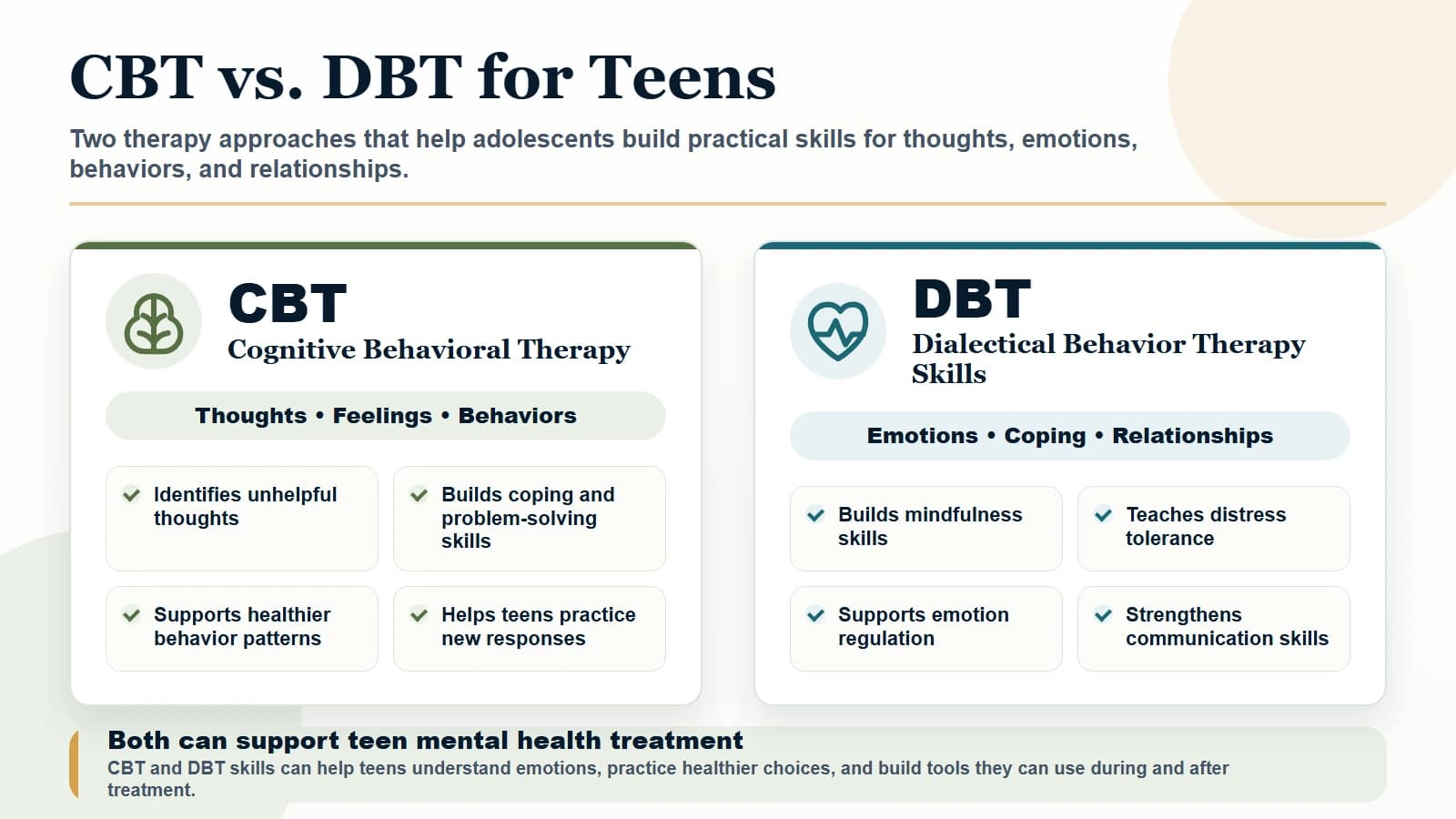
A teen usually cannot learn coping skills for the first time while already flooded. Skills need repetition when the teen is calmer: naming emotions, noticing body cues, using distress tolerance, asking for space appropriately, returning to a conversation, repairing harm, and building routines that reduce vulnerability. This is why DBT-informed skills, family coaching, and structured practice can matter.

Parents also need skills. A caregiver's tone, timing, limit-setting, and repair attempts can either reduce escalation or accidentally intensify it. That does not mean parents are the cause. It means the family system is part of the treatment environment, and everyone needs a plan for what to do when emotion starts rising.

When higher support may be appropriate

Residential treatment may be worth discussing when emotional episodes involve safety concerns, self-harm, suicidal thoughts, aggression, running away, repeated school disruption, substance use, or family conflict that makes outpatient work hard to sustain. A structured setting can create enough containment for the teen to practice skills without the family living in constant crisis.

The goal is not to make a teen emotionless. The goal is to help them feel emotion without being controlled by it, communicate distress before it becomes unsafe, accept limits without collapse, and repair relationships after difficult moments.


Sources and further reading

Signs and symptoms

Common signs parents may notice

The signs below should not be used for diagnosis. They are starting points for a conversation with a qualified professional or admissions specialist.

  • Explosive anger, panic, crying, shutdown, impulsive comments, or rapid emotional shifts.
  • Conflict that escalates quickly and feels out of proportion once everyone is calmer.
  • Self-harm urges, unsafe threats, running away, property damage, or risky coping during distress.
  • Difficulty accepting limits, transitions, disappointment, embarrassment, or perceived rejection.
  • Deep shame after an episode, followed by avoidance, apology cycles, or fear that change is impossible.

Parent planning

What to track before deciding next steps

A clear pattern is more useful than a perfect label. Before an admissions or clinical conversation, parents can write down what they are seeing, how often it happens, and how it affects daily life.

What to notice about Emotional Dysregulation

  • What situations most often trigger intense reactions.
  • How long episodes last and what helps the teen return to baseline.
  • Whether safety risks, self-harm, suicidal thoughts, substance use, or aggression occur during episodes.
  • Whether emotional episodes are connected to mood disorders, trauma, ADHD, anxiety, autism, substance use, or family conflict.

Questions to bring into the conversation

  • What happens during the most intense emotional episodes?
  • Has anyone been hurt, threatened, or unsafe during those moments?
  • Does your teen feel remorse, shame, confusion, or numbness afterward?
  • What has outpatient therapy or school support already tried?

Daily life impact

How Emotional Dysregulation can affect daily life

Emotional dysregulation can make ordinary family life feel unpredictable. Parents may stop asking reasonable questions because they fear the reaction. Siblings may walk around quietly. The teen may feel disliked, misunderstood, or embarrassed by their own behavior.

School can also become difficult. Teachers may see outbursts, shutdown, impulsive words, refusal, or avoidance without seeing the shame and overwhelm underneath. The teen may be disciplined repeatedly without receiving the emotional skills they need.

Residential treatment fit

When residential treatment may be appropriate

Residential treatment may help when emotional episodes are frequent, unsafe, or too disruptive for outpatient care alone. It may also help when the home environment has become organized around preventing the next explosion.

A higher level of structure can support assessment, routine, skill practice, medication evaluation when appropriate, family coaching, and planning for safer communication after discharge.

Treatment approach

How NorthLeaf supports teens

Treatment may include DBT-informed skills, CBT-informed reflection, individual therapy, group work, family therapy, psychiatric evaluation, sleep and routine support, safety planning, and repair-oriented communication practice.

The best plans avoid both extremes: excusing unsafe behavior because the teen is distressed, or punishing distress without teaching the skills required to handle it differently.

NorthLeaf support

Structure, skills, family support, and planning

Treatment planning should connect symptoms with daily functioning, safety, family needs, school needs, and the next level of support after residential care.

  • Evidence-based therapy and skills practice based on the teen's treatment plan.
  • NorthLeaf Growth Model support for stabilization, skill-building, family integration, and next-step planning.
  • Family involvement so parents are part of treatment and transition planning.
  • Academic continuity and transition planning when clinically appropriate.
  • Safety, supervision, and predictable structure across the treatment day.

Family involvement

Family involvement is central because dysregulation often unfolds in relationships. Parents may need support setting limits, staying calm, taking threats seriously, avoiding escalation traps, and repairing after conflict.

The teen may also need help understanding that repair is not humiliation. Repair can be a way to rebuild trust and prove that a hard moment does not have to define the relationship.

Academic impact

School planning may need to address emotional breaks, communication with staff, workload stress, peer conflict, disciplinary history, and how the teen can return after an episode without being trapped in shame.

Academic support should not only focus on grades. It should help the teen practice tolerating feedback, asking for help, managing transitions, and recovering from mistakes.

Common questions

Questions parents often ask

Is emotional dysregulation a diagnosis?
Not by itself. It is a symptom pattern that may appear with anxiety, depression, ADHD, trauma, mood disorders, substance use, or other concerns.
Does emotional dysregulation mean my teen is manipulative?
Not necessarily. Teens can behave in unsafe or hurtful ways during distress, but the pattern often reflects limited coping capacity, shame, fear, impulsivity, or overwhelm.
Can DBT skills help?
DBT-informed skills may help teens practice distress tolerance, emotion regulation, communication, and safer coping, especially when skills are repeated consistently.
When is residential treatment worth discussing?
It may be worth discussing when episodes involve safety concerns, self-harm, aggression, severe family disruption, school failure, substance use, or outpatient care is not enough.

Need help understanding Emotional Dysregulation and next steps?

Speak with admissions about what your teen is experiencing, whether residential support may be appropriate to explore, and how to begin insurance verification.